Why farms buy copper
Nobody chooses copper alloy mesh because it's a better net. They choose it because nylon and HDPE foul. Occluded nets mean less oxygen, slower growth, higher mortality and constant diver cleaning.

Metal-free, PFAS-free antifouling for hulls, nets and everything that sits still. It's sprayed on like any antifouling paint, and it works at zero knots.
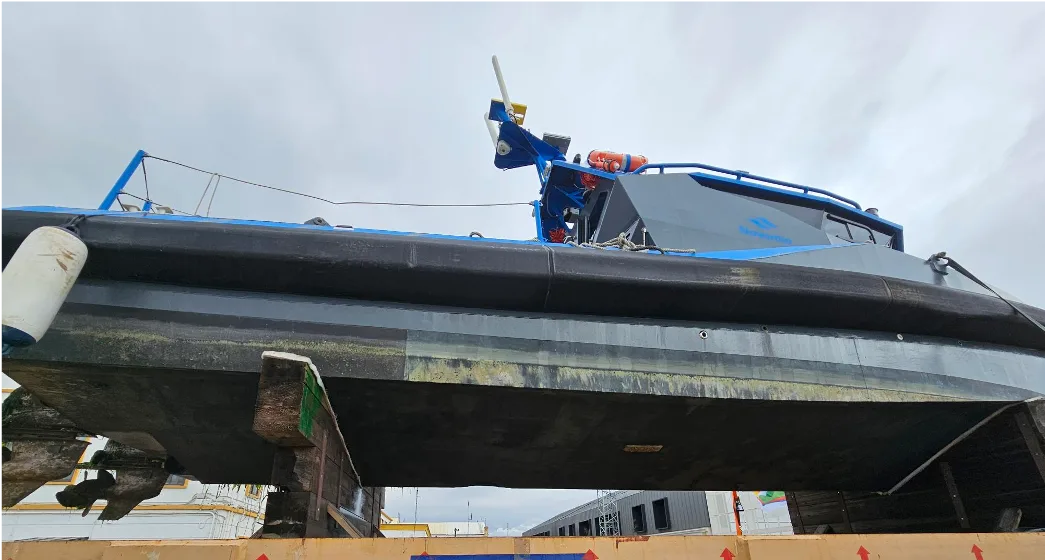 Aegis-BioStayed clean CopperIncumbent coating
~58%
of marine antifouling still relies on copper, and regulators are tightening copper limits in harbours and marinas.
Speed
Silicone fouling-release sheds fouling only when a vessel moves fast enough. Below that, it fouls like bare steel.
Still
Ships alongside, fleets in reserve, nets, pilings and offshore foundations spend most of their life standing still. Today they get copper or nothing.
Antifouling paints are biocidal products (product-type 21) that need an approved active substance and a product authorisation.
Every antifouling paint sold in the U.S. must be registered with EPA as a pesticide under FIFRA, with state rules layered on top.
Antifouling paint with more than 0.5% copper is restricted on recreational vessels, wooden boats excepted.
Aegis-Bio and a copper self-polishing coating, side by side on the same uncrewed surface vessel in Southern Europe, against an uncoated control.
Aegis-BioStayed clean CopperIncumbent coating 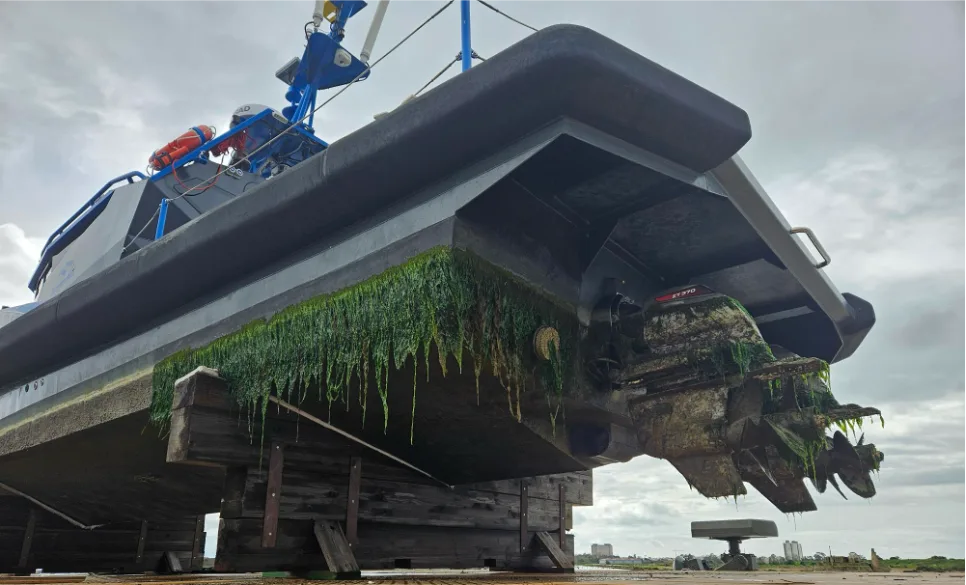 ControlSame period · heavy fouling
Fig. 1 · Six months submerged on a European naval shipbuilder's uncrewed surface vessel. Aegis-Bio left of frame, copper right; the control hull is at right.
Same vessel, same exposure
ASTM D3623 · static panels
ISO 15181 · µg/cm²/day
USD
Five-year service life between recoats, against 1–4 years for the alternatives.
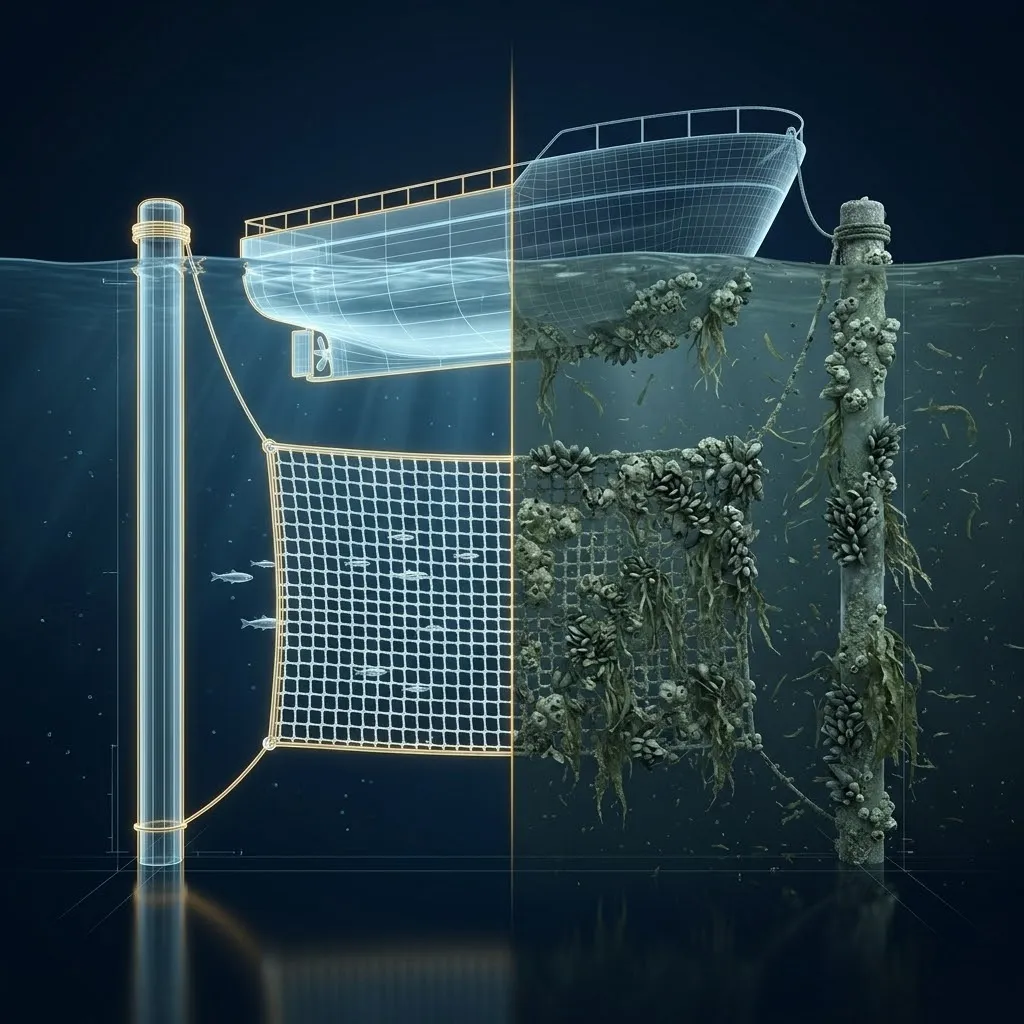
Nobody chooses copper alloy mesh because it's a better net. They choose it because nylon and HDPE foul. Occluded nets mean less oxygen, slower growth, higher mortality and constant diver cleaning.
~$500K
for a copper alloy pen, against about $10K for HDPE or Dyneema. The farm pays a 50× premium to solve a surface problem.
Coat the cheap substrate and it outperforms the expensive one. HDPE and Dyneema last longer than nylon, cost a fraction of copper alloy, are lighter to handle and carry no heavy-metal load into the water or the food supply.
Net costs from published field comparisons and operator data. Static fouling resistance: nets, moored hulls, pilings, offshore wind, intakes.
Why Aegis-Bio wins
Ships spend most of their life alongside, where silicone fails. A navy on Aegis-Bio is the reference every commercial buyer asks for.
Why Aegis-Bio wins
A copper-free hull for owners under environmental pressure.
Why Aegis-Bio wins
Nets never move. Clean nets mean oxygen, growth and fewer net changes.
Why Aegis-Bio wins
Foundations and subsea structures sit still for decades.
Why Aegis-Bio wins
Marinas lead the copper restrictions.
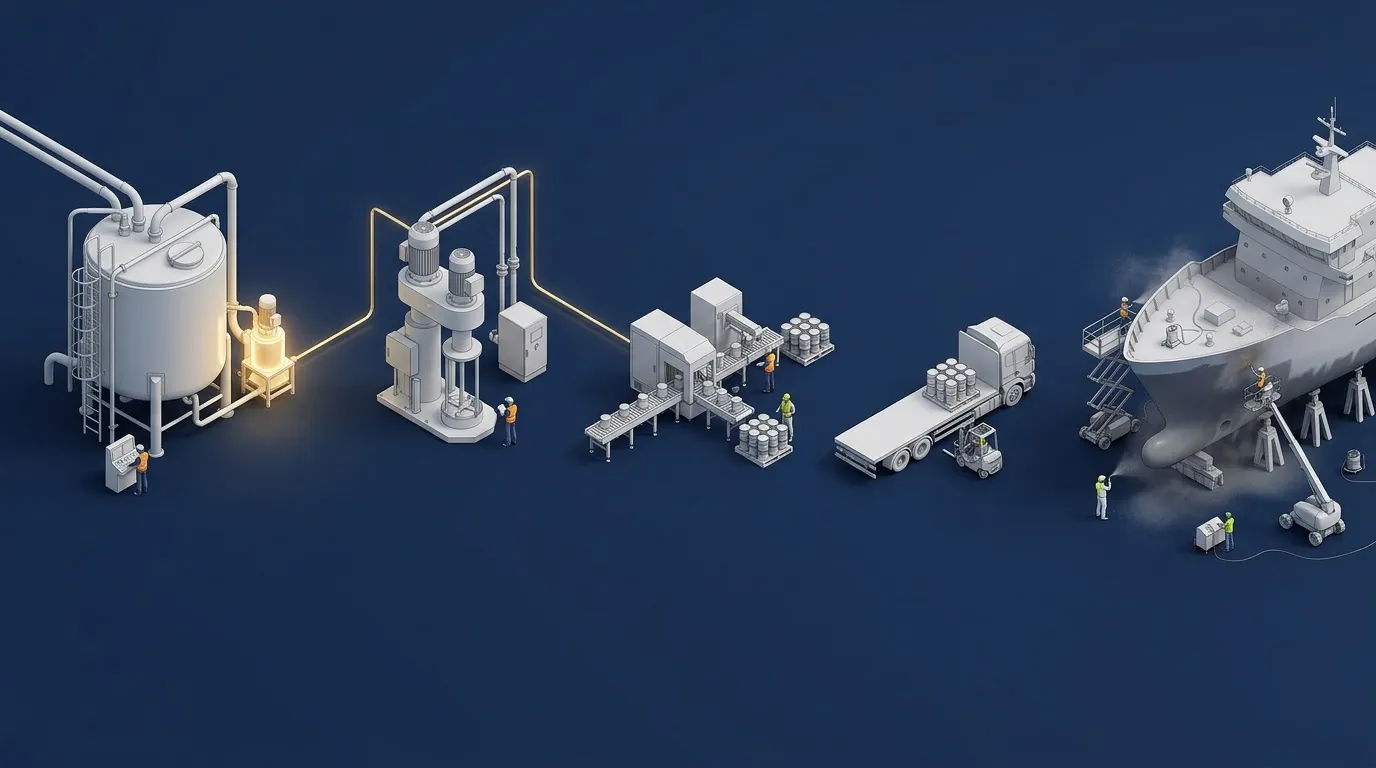 HullsSprayed by yard crews
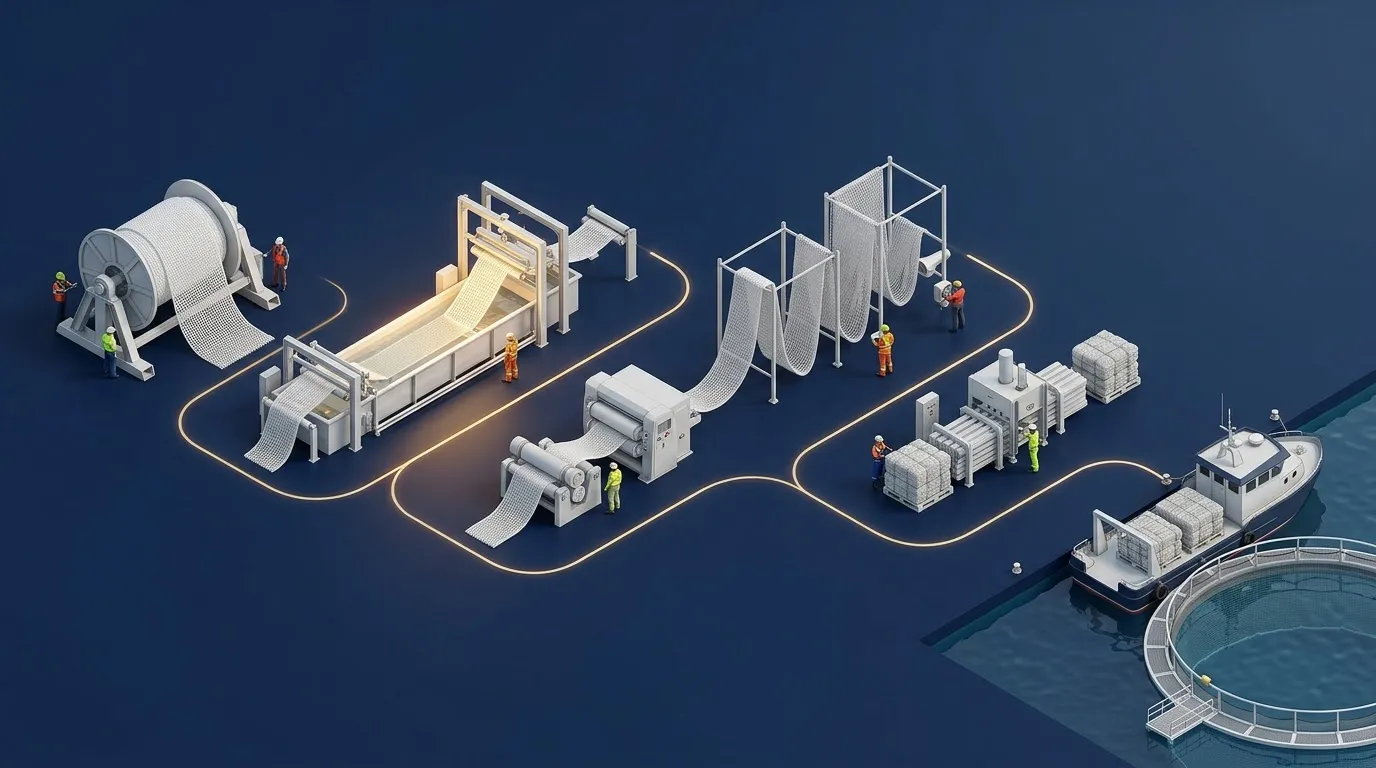 NetsOne dip tank at the mill
The active is dosed at the paint plant as Part B into the base paint, then dispersed and canned with viscosity and fineness QC. The shipyard preps, primes and sprays it like any antifouling, with a film-thickness and holiday-test gate before launch.
Knitted HDPE or Dyneema net runs through one Aegis-Bio dip tank and squeeze rollers, then air cures. QC checks add-on weight and pull-off before baling and deploying at the farm.