A · Dry-ice test
Issued glove vs treated liner at −110 °F. The treated liner stayed 103.7 °F warmer inside.

Incredibly thin. Super warm. One quilted laminate that you cut into gloves, boots, jackets and coolers, and sew or bond in like any insert.
103.7 °F
warmer inside a treated liner than inside the Army's extreme-cold glove (dry-ice test, −110 °F).
2.5×
the insulating performance of the best commercial benchmark.
3 mm
of laminate: waterproof shell, quilted Aegis-Gel, liner. It flexes and drapes.
97%
of its warmth retained when wet. Down keeps 34%.
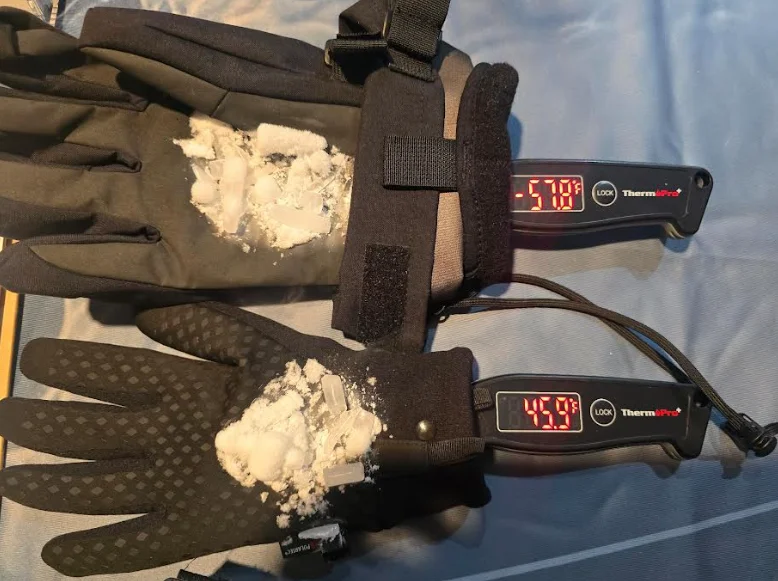 Army-issued glove−57.8 °F inside Aegis-Gel liner45.9 °F inside
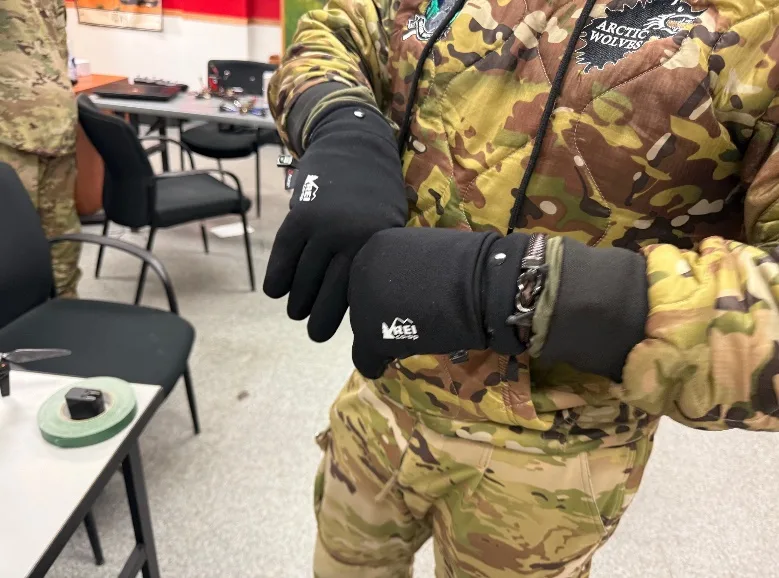
Dry-ice test at −110 °F, treated glove below and Army-issued glove above. Right: a U.S. Army soldier trying on the gloves.
Issued glove vs treated liner at −110 °F. The treated liner stayed 103.7 °F warmer inside.
U.S. Army JPMRC 26-02, Alaska. −35 °F to 0 °F ambient, 40+ inches of snow.
A 5 mm sample on a −15 °C Peltier plate, imaged by FLIR at the U-M lab under DARPA ICE. About 20 °C warmer than the Army-standard glove at 10 minutes, with better dexterity.
Clo per mm · ASTM F1868
ISO 11092
% at 10 psi
AATCC 135 · % of clo retained
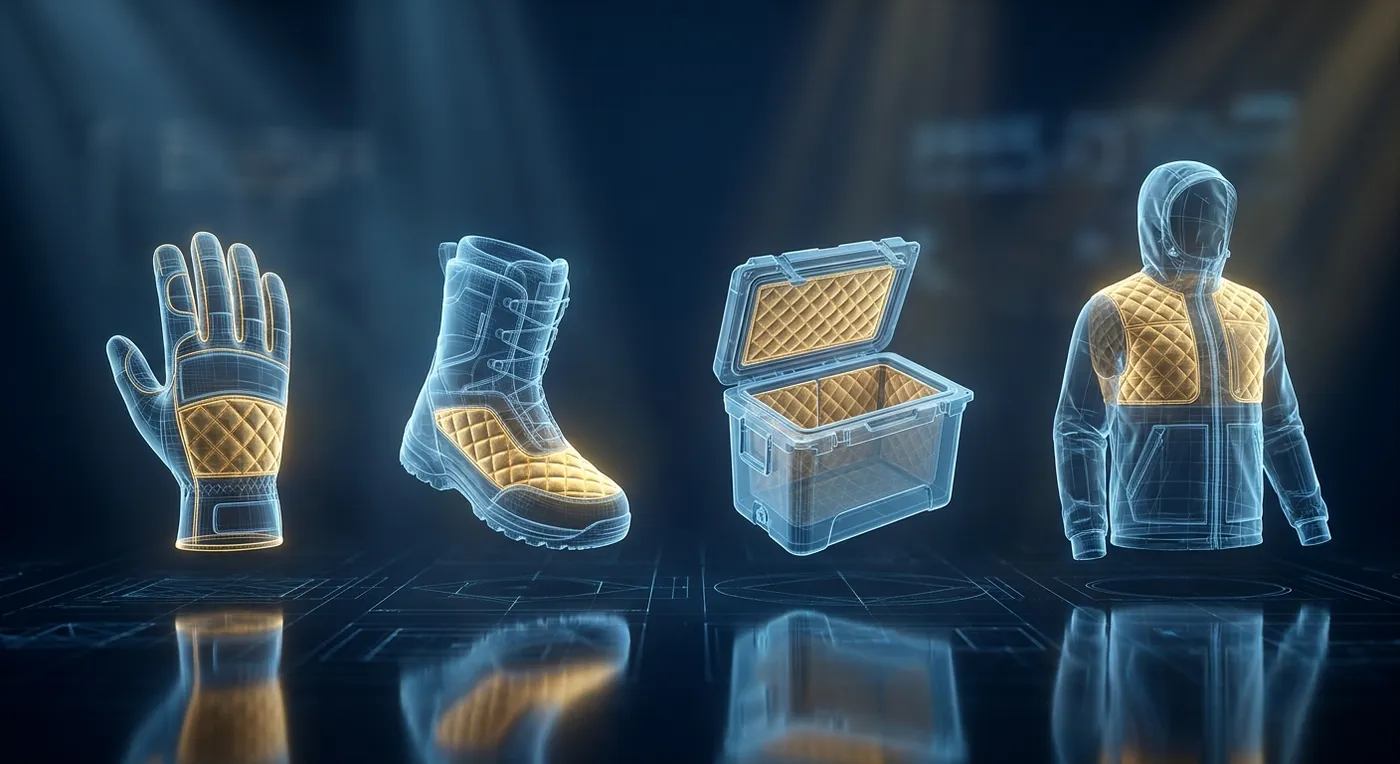
Warmth where the cold gets in, with Level 5 dexterity.
Thin enough to keep the fit.
Packable, washable, warmer.
Same ice retention, more room inside.
+38%
interior volume in a cooler wall at equal ice retention.
−30%
weight. 12 mm of Aegis-Gel does the work of 50 mm of PU foam.
5 days
of ice retention, the same for both wall constructions.
Mix the gel, cast or laminate it, cure, die-cut inserts, then pass the QC gate: Peltier thermal delta at 25 °C plus a flex test at −40 °C. Sew into the liner or bond into the cooler wall, run a final thermal check, and ship. Available as powder, paste, film, gel or cream.